Lenten Rhythms: War & Peace
Leonid Tolstoy’s War & Peace, a sweeping historical novel, chronicles the French invasion of Russia between 1805 and 1820 commandeered by Emperor Napoleon Bonaparte. The war in Russia was just one in a series of conflicts Napoleon instigated against European monarchies, known as the Napoleonic Wars.
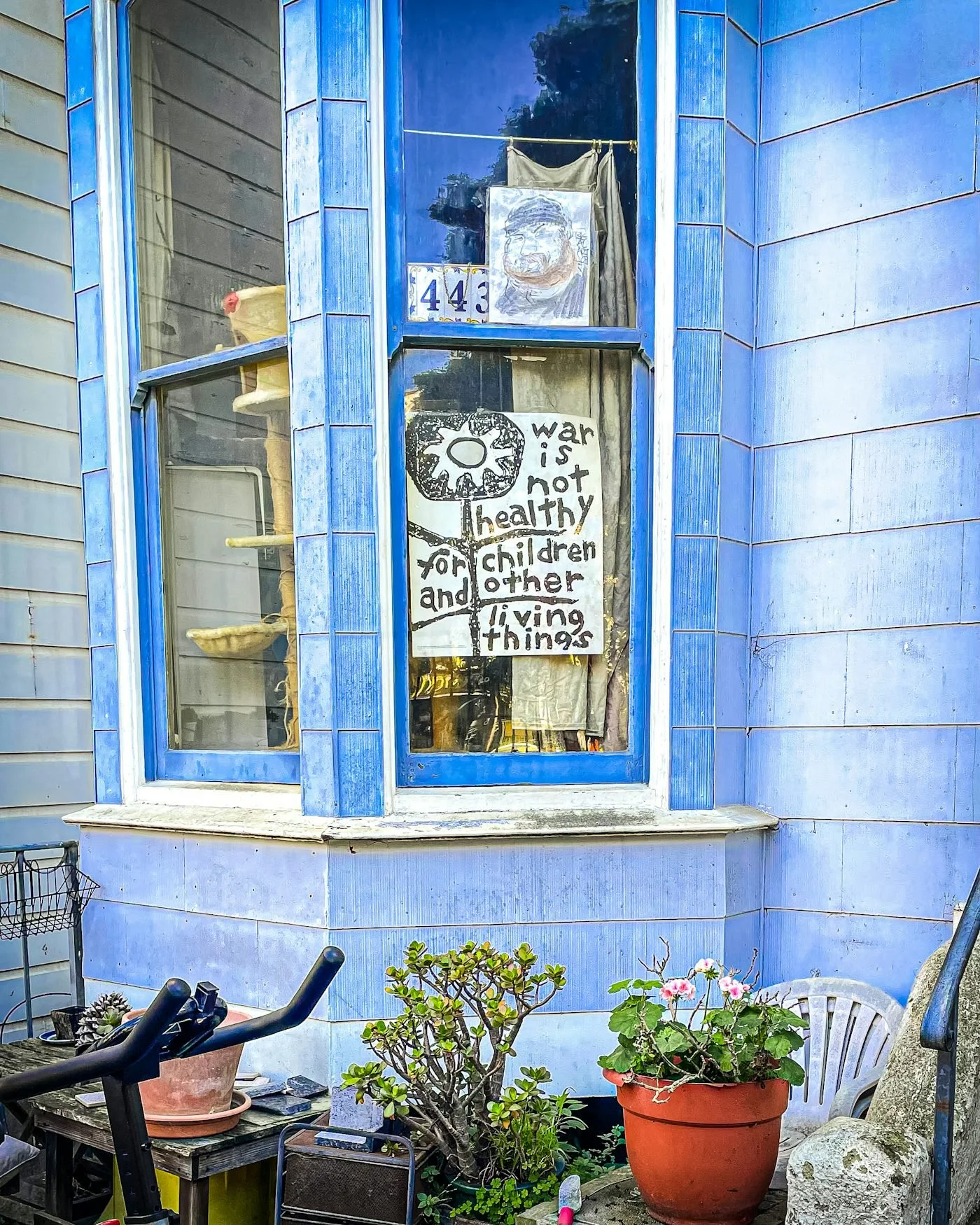
War & Peace details the invasion of Russia through the eyes of several Russian aristocratic families, from the battle at Borodino to the razing of Moscow. Tolstoy masterfully depicts the monotony, the unpredictability, the atrocity, even the vanity of war, and lends perspective to humankind’s urge to conquer at all costs–a narrative that, some two-hundred years later, is eerily similar to the catastrophic wars being waged still today.
So, you may wonder, what does War & Peace have to do with Lent?
The Bible, the true story of the whole world, is like War & Peace. It is an epic saga that begins in a peaceful, plentiful, beautiful garden created by God for Adam and Eve. The story takes a sharp turn, early in the story, when they fall prey to the serpent’s lie and rebel against God their Creator.
Their rebellion plunged the world into darkness.
The Bible, from that point forward, narrates sin’s insidious effect on marriages, families, societal structures, commerce, politics, and governments. It spares no detail as it gives account of the endless cycles of war and peace and war again, and describes the experiences of chaos of rebellion against God.
In the New Testament, Paul’s letter to the church in Rome cites the comprehensive nature and consequence of this rebellion. No matter our age, gender, ethnicity, nationality, or net worth, every last one of us is under sin.
None is righteous, no, not one; no one understands, no one seeks for God, all have turned aside; together they have become worthless; no one does good, not even one.
I remember when as a newer believer I began digging a little bit deeper into this passage. I carefully cross-referenced each line in Romans 3:9–18 with corresponding passages in the OT and NT–all of which reinforced God’s charge against humankind. Guilty.
All have turned aside; together they have become worthless; no one does good, not even one. Their throat is an open grave, they use their tongues to deceive, the venom of asps is under their lips, their mouth is full of curses and bitterness.
Their feet are swift to shed blood; in their paths are ruin and misery, and the way of peace they have not known. There is no fear of God before their eyes.
This stunning account ends with an all-encompassing indictment …
There is no distinction: for all have sinned and fall short of the glory of God (Rom 3:12–18, 22–23).
The unfathomable depth of sin was made visible to me when Bob and I visited Auschwitz-Birkenau, Poland a number of years ago.
Auschwitz-Birkenau, if you do not know already, was the largest and most notorious labor and death camp of World War II and existed for the sole purpose of exterminating Jews. The entire camp exists still today as a living memorial and is carefully maintained to preserve the authentic site and its artifacts against decay.
One room, in the on-site museum, was lined with three large glassed-in-cases that contained some of the possessions taken from people who had been put to death there. The first contained thousands of pairs of eye-glasses, the second held the shaved hair of countless victims, the third included all manner of prosthetics, crutches, and canes. Then, in the center of the same room there was a schematic of the camp–the barracks, latrines, and the ovens where people exterminated in mass.
I remember feeling a sense of horror and hopelessness as I took in these surroundings. I wondered, what kind of person is capable of such wickedness? God’s stunning indictment against humankind, which was fresh in my mind, seemed to echo through the room.
There is none righteous, not.even.one.
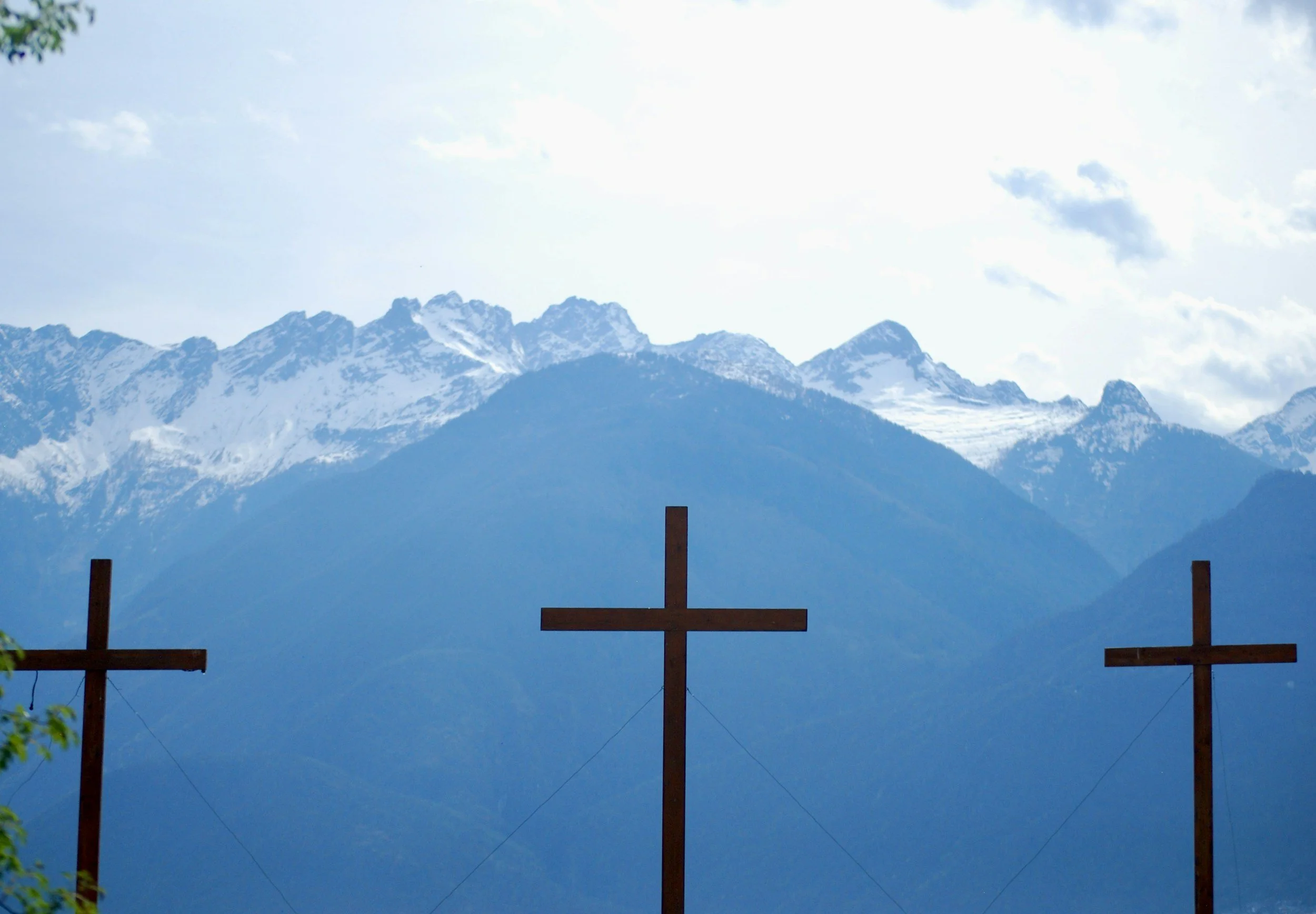
In that moment, the purpose behind the crucifixion took on a deeper meaning for me. Jesus, the Son of God, yielded to the Father’s will and bore the incomprehensible weight of my sin, our sin, all sin for all of time, in his body on the cross. And in one final breath Jesus, the Prince of Peace, declared victory over the war against sin. “It is finished!”
Lent reminds us that as the cycle of war and peace and crimes against humanity drones on, the gospel, juxtaposed against the darkness of sin, the light of the gospel–the strong and true promise of God dispels the darkness and makes all things new.
God, with undeserved kindness, declares that we are righteous. He did this through Christ Jesus when he freed us from the penalty for our sins. For God presented Jesus as the sacrifice for sin. People are made right with God when they believe that Jesus sacrificed his life, shedding his blood (Romans 3:24–25)
The consequences of sin are great, but God’s grace is greater still.